
-
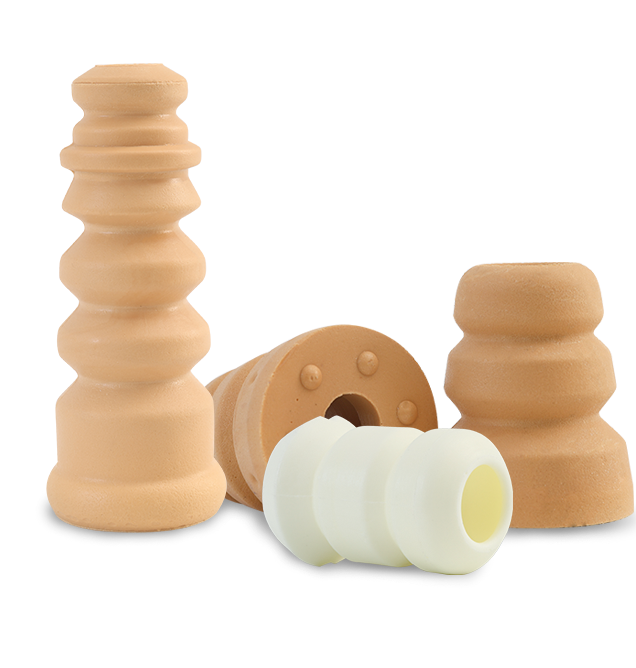
ฟังก์ชั่นหลักและวัตถุประสงค์ของ Bump Stop ของโช้คอัพหลัง — เดอะ โช้คอัพหลัง Bump Stop เป็นส่วนประกอบระบบกันสะเทือนที่สำคัญซึ่งออกแบบมาเพื่อทำหน้าที่เป็นขีดจำกัดทางกลไกสำหรับการเดินทางของระบบกันสะเทือนหลัง ในขณะที่โช้คอัพและคอยล์สปริงจะจัดการการเคลื่อนที่ของล้อในแนวตั้งส่วนใหญ่ภายใต้สภาพการขับขี่ปกติ การกระแทกที่รุนแรง เช่น หลุมบ่อ การชนด้วยความเร็ว สิ่งกีดขวางทางออฟโรด หรือน้ำหนักบรรทุกหนัก อาจทำให้ระบบกันสะเทือนบีบอัดเกินระยะการทำงานที่ออกแบบไว้ ในสถานการณ์เหล่านี้ ยางกันกระแทกจะทำหน้าที่เป็นบัฟเฟอร์ป้องกันที่ดูดซับพลังงานที่เหลือ และป้องกันการสัมผัสระหว่างโลหะกับโลหะระหว่างโช้คอัพ แชสซีของยานพาหนะ และขายึด สิ่งนี้ไม่เพียงแต่ปกป้องความสมบูรณ์ของโครงสร้างของระบบกันสะเทือน แต่ยังรักษาคุณภาพการขับขี่ ป้องกันการสึกหรอของส่วนประกอบระบบกันสะเทือนก่อนเวลาอันควร และลดโอกาสที่จะเกิดความล้มเหลวร้ายแรงภายใต้ภาระหนักหรือสภาพการขับขี่ที่รุนแรง
-
การโต้ตอบกับโช้คอัพ — เดอะ shock absorber, typically a hydraulic or gas-filled damper, controls the rate of compression and rebound in the suspension. When the suspension reaches its maximum compression—commonly referred to as “full bump” or “bottoming out”—the shock absorber alone may not fully dissipate the kinetic energy of the impact. At this stage, the Rear Shock Absorber Bump Stop comes into play, contacting the shock rod, piston, or internal end cap. Designed to compress progressively under load, the bump stop absorbs energy that exceeds the shock absorber’s damping capacity. By providing a controlled cushion at the extreme end of the shock stroke, the bump stop reduces the magnitude of forces transmitted to the shock housing, mounting points, and adjacent components, mitigating damage and extending the lifespan of the suspension assembly. This interaction ensures that even under sudden, high-energy impacts, the shock absorber remains functional and the suspension system continues to operate safely.
-
ปฏิสัมพันธ์กับคอยล์สปริง — เดอะ coil spring provides the primary elastic force for supporting the vehicle’s weight, maintaining ride height, and absorbing moderate impacts. During severe compression events, the spring may approach its solid height—its maximum compression—beyond which the spring itself cannot absorb additional energy without permanent deformation. The Rear Shock Absorber Bump Stop complements the coil spring by acting as a secondary absorber. Its high-density rubber or polyurethane construction allows it to compress gradually, taking on a portion of the load that exceeds the elastic limit of the spring. This combined action prevents sudden bottoming out, maintains suspension geometry, and ensures a smoother transfer of forces to the chassis. Essentially, the bump stop extends the effective travel range of the suspension in a controlled and progressive manner, protecting both the coil spring and vehicle structure from excessive loads.
-
การดูดซับพลังงานแบบก้าวหน้าและการจัดการโหลด — ตัวกันกระแทกประสิทธิภาพสูงได้รับการออกแบบให้มีรูปแบบการบีบอัดแบบก้าวหน้า ซึ่งหมายความว่าความต้านทานจะเพิ่มขึ้นเมื่อมีการบีบอัดที่ลึกยิ่งขึ้น ในช่วงเริ่มต้นของการสัมผัส ตัวกันกระแทกจะให้เบาะที่นุ่มนวลขึ้นเพื่อดูดซับการเคลื่อนที่เกินเล็กน้อยและลดการตอบสนองที่รุนแรง ในขณะที่การบีบอัดดำเนินต่อไป วัสดุจะแข็งตัวขึ้น โดยดูดซับแรงที่มากขึ้น ในขณะเดียวกันก็ป้องกันการสัมผัสระหว่างโลหะกับโลหะโดยตรง พฤติกรรมที่ก้าวหน้านี้ทำงานร่วมกันกับคุณลักษณะการหน่วงของโช้คอัพและความยืดหยุ่นของคอยล์สปริง เพื่อให้มั่นใจว่าระบบกันสะเทือนจะค่อยๆ กระจายพลังงานแทนที่จะถ่ายโอนไปยังแชสซีอย่างกะทันหัน การดูดซับพลังงานแบบก้าวหน้ามีความสำคัญอย่างยิ่งในยานพาหนะที่ต้องขับขี่แบบออฟโรด การลากจูง หรือน้ำหนักบรรทุกหนัก ซึ่งแรงในแนวดิ่งขนาดใหญ่สามารถเกิดขึ้นซ้ำแล้วซ้ำอีกและคาดเดาไม่ได้

Bump Stop ของโช้คอัพหลังมีปฏิกิริยาอย่างไรกับโช้คอัพและคอยล์สปริง เพื่อป้องกันไม่ให้รถหลุดออกระหว่างการบีบอัดระบบกันสะเทือน
-
.jpg "HP001 โช้คอัพหน้า Bump Stop สำหรับ Chevrolet")
HP001 ด้านหน้า Shock Absorber Bump Stop เป็นส่วนประกอบโพลียูรีเทน (PU) ที่ออกแบบมาเพื่อให้ระบบกันกระแทกด้านหน้าของรถยนต์ Chevrolet ที่ใช้ร่วมกันได้ บล็อกมีขนาด φ57.5*φ19*70 มม. และสามารถติดตั้งได้อ...
See Details -
.jpg "HP005 โช้คอัพหลัง Bump Stop สำหรับ Ford")
เข้ากันได้กับ Ford Transit Courier รุ่นตั้งแต่ปี 2014 ถึง 2023 และ Ford B-MAX รุ่นปี 2012 ถึง 2016 HP005 ด้านหลัง Shock Absorber Bump Stop ได้รับการออกแบบมาให้พอดีกับระบบกันสะเทือนหลัง โดยทำหน้าที่...
See Details -
.jpg "HP012 Front Shock Absorber Auxiliary Spring Bump Stop สำหรับ Mercedes-Benz")
HP012 ด้านหน้า Shock Absorber Auxiliary Spring Bump Stop เข้ากันได้กับ Mercedes-Benz Vito รุ่นปี 1996 ถึง 2003 ได้รับการออกแบบเพื่อให้พอดีกับระบบกันสะเทือนหน้า โดยช่วยปกป้องความสมบูรณ์ของโครงสร้างข...
See Details -
.jpg "HP023 โช้คอัพหน้า Damper Bump Stop สำหรับ Peugeot")
ออกแบบมาเป็นพิเศษสำหรับรถเปอโยต์ 308 ตั้งแต่ปี 2013 ถึง 2021 ตัวกันสะเทือนของโช้คอัพหน้านี้ให้ความพอดีและประสิทธิภาพที่เชื่อถือได้ ผลิตขึ้นเพื่อตอบสนองข้อกำหนด OE ภายใต้หมายเลขชิ้นส่วน 9807659680 H...
See Details -
.jpg "HP027 Front Strut Bump Stop สำหรับวอลโว่")
HP027 ด้านหน้า Strut Bump Stop ได้รับการออกแบบมาเพื่อใช้ในรุ่น Volvo S40 (2004–2009), V50 (2005–2009) และ C30 (2008) โดยทำหน้าที่เป็นส่วนประกอบสำคัญในระบบกันสะเทือนหน้าของรถ โดยให้เอฟเฟกต์กันกระแทก...
See Details -
.jpg "HP032 โช้คอัพหน้า Bump Stop สำหรับ Honda")
HP032 กันกระแทกโช๊คหน้า Bump Stop เป็นส่วนประกอบทดแทนที่ใช้ได้กับรถยนต์ Honda หลายรุ่น รวมถึง Accord (2013–2017), Accord Coupe (2012–2017), CR-V (2006–2021), CR-V (USA, 2006–2016), Pilot (2015–2022...
See Details
-
รู้เบื้องต้นเกี่ยวกับ Bump Stops เมื่อเป็นเรื่องของการรักษาของคุณ ยางกันกระแทกโช้คอัพของรถอเมริกัน ส่วนประกอบบางอย่างมองข้ามได้ง่าย ในขณะที่โช้คอัพและสตรัทมักจะ...
See Details -
-3.jpg "ยางกันกระแทกรถยนต์จำเป็นหรือไม่? คู่มือที่ครอบคลุมเกี่ยวกับฟังก์ชัน ประเภท และการเปลี่ยน")
1. ข้อมูลเบื้องต้นเกี่ยวกับจุดชนกันของยานยนต์: แนวคิดพื้นฐานและความสำคัญ ยางกันกระแทกรถยนต์คืออะไร? ยางกันกระแทกรถยนต์ เป็นส่วนประกอบบัฟเฟอร์ที่ติดตั้งในระบบก...
See Details -
-1.jpg "ยางกันกระแทกในรถยนต์คืออะไร และมีหน้าที่อะไรในระบบกันสะเทือนของรถยนต์?")
BumpStop คืออะไร? ยางกันกระแทกหรือที่เรียกว่า “ลิมิตติ้งแดมเปอร์” เป็นส่วนประกอบสำคัญในระบบกันสะเทือนของรถยนต์ ในขณะที่มักถูกมองข้ามไปนั้น ชนหยุด มีบทบาทสำคัญในการทำให...
See Details -
.jpg "Peugeot Shock Absorber Bump Stop: ฟังก์ชั่นการเปลี่ยนและปัญหาทั่วไป")
ข้อมูลเบื้องต้นเกี่ยวกับ Bump Stops ของโช๊คอัพของ Peugeot Bump Stop ของโช้คอัพคืออะไร? ความหมายและฟังก์ชัน ที่ โช้คอัพเปอร์โยต์กันกระแทก ซึ่งมักเรียกว่ากั...
See Details
 Add: สวนอุตสาหกรรม Wuyi เมืองตงกัง อู๋ซี มณฑลเจียงซู จีน
-
 +86-510-88350093
-
 [email protected]
-
 +86-510-88766081
ลิขสิทธิ์ © 2025 Wuxi Huipu Auto Parts Co., Ltd. สงวนลิขสิทธิ์.
 ผู้ผลิตขายส่งยางกันกระแทกสำหรับกันกระแทก
